

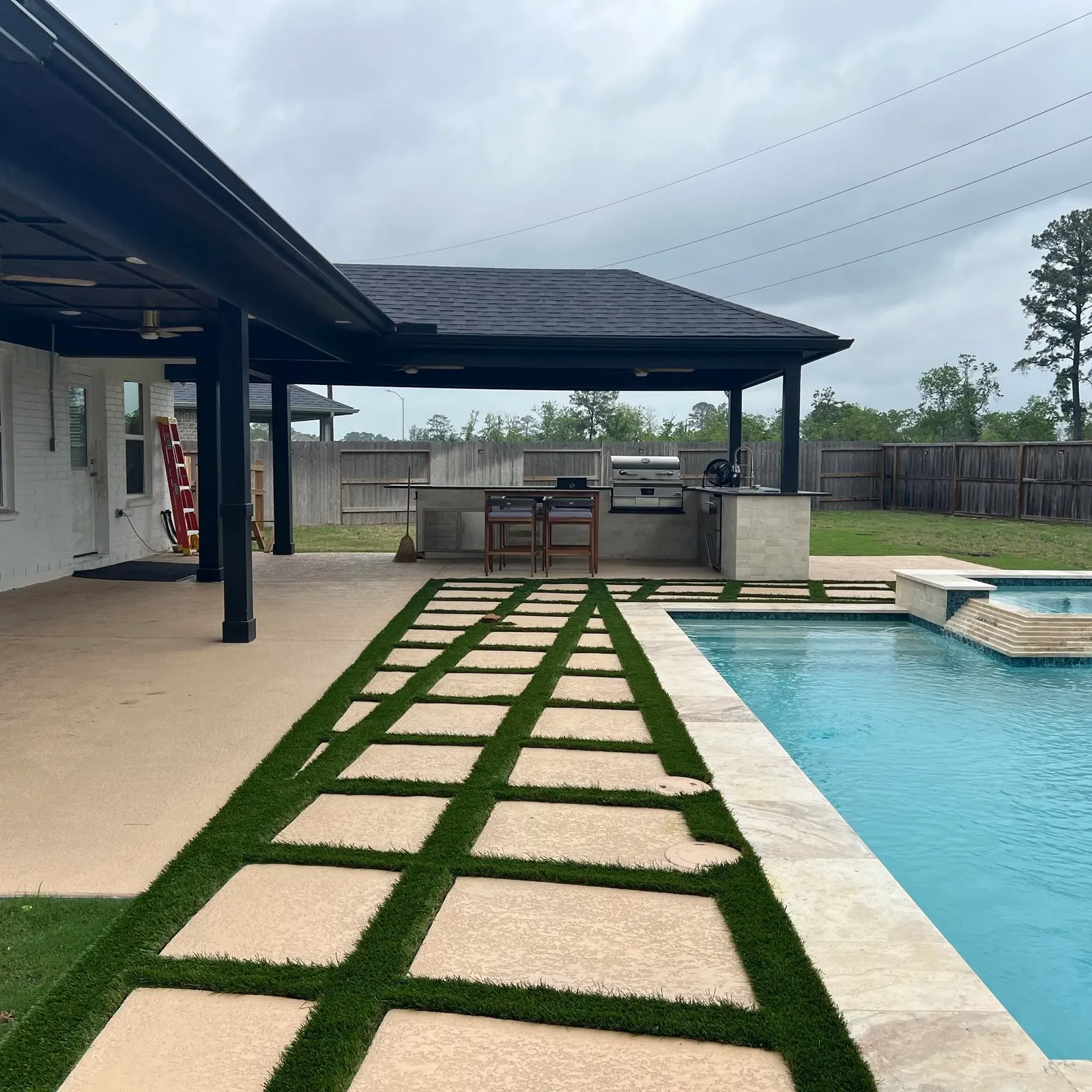
Paver patios, travertine pool decks, turf-and-paver walkways and paver driveways — set on a properly compacted base with edge restraint and real drainage, so the surface stays flat, drains right, and looks sharp for years. One licensed crew designs it, permits it, and builds it.
Anyone can lay pavers on sand and walk away. What keeps them flat, tight, and drainable for years is the part you never see — a deep compacted base, the right bedding, edge restraint that locks the field in place, and grading that carries water away from the house. That's how we build every patio, deck, walkway, and driveway, so the finished surface stays true instead of settling into ruts and puddles.
Interlocking concrete pavers in the pattern, color, and border you want. They shrug off the Texas heat, won't crack across the slab like poured concrete, and any single paver can be lifted and reset if it ever needs it.
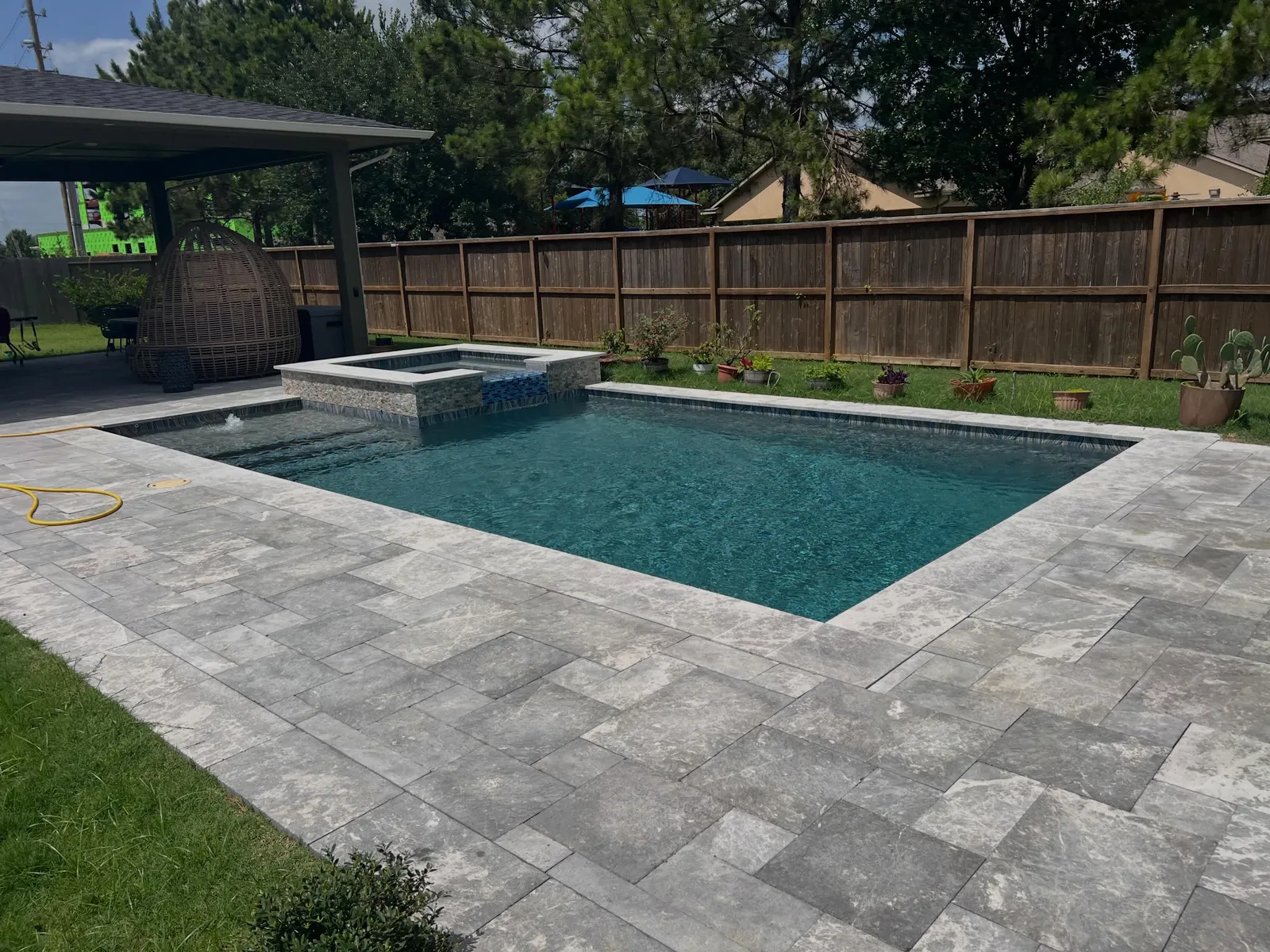
Natural travertine stays noticeably cooler underfoot than concrete and keeps its grip when it's wet — which is exactly what you want circling a pool. We set it with tight, even joints and matching coping for a clean, high-end edge.
Paver stepping bands with strips of low-maintenance artificial turf between them make a crisp, modern path from the patio to the pool or side yard — no muddy trail, no grass to trim around every stone.
A paver driveway carries vehicle weight without the long cracks that split poured concrete, and it lifts the curb appeal of the whole house. We build the deeper base these loads need and lock the field with a solid edge.
A contrasting soldier-course border or a banding accent frames the field and hides where surfaces meet. It's a small detail that makes a patio or driveway read as intentional and finished rather than just filled in.
Excavation, a deep compacted road-base, geotextile where the soil needs it, and grading that pitches water off the surface and away from the foundation. This is the invisible work that decides whether pavers last.
Pavers only fail when the work under them is rushed. We build the base and the edges the right way the first time, so the surface stays true — and if life ever damages one stone, it's a repair, not a demolition.
A deep, machine-compacted base with a locked-in edge keeps the field from spreading or rutting, so pavers stay put instead of drifting apart over time.
Natural stone reflects heat instead of soaking it up, so bare feet aren't hopping across the deck on a July afternoon — and it holds traction when it's splashed.
A cracked or stained paver lifts out and a new one drops in — no seams, no patch that never matches, none of the visible scars poured concrete leaves behind.
Walkways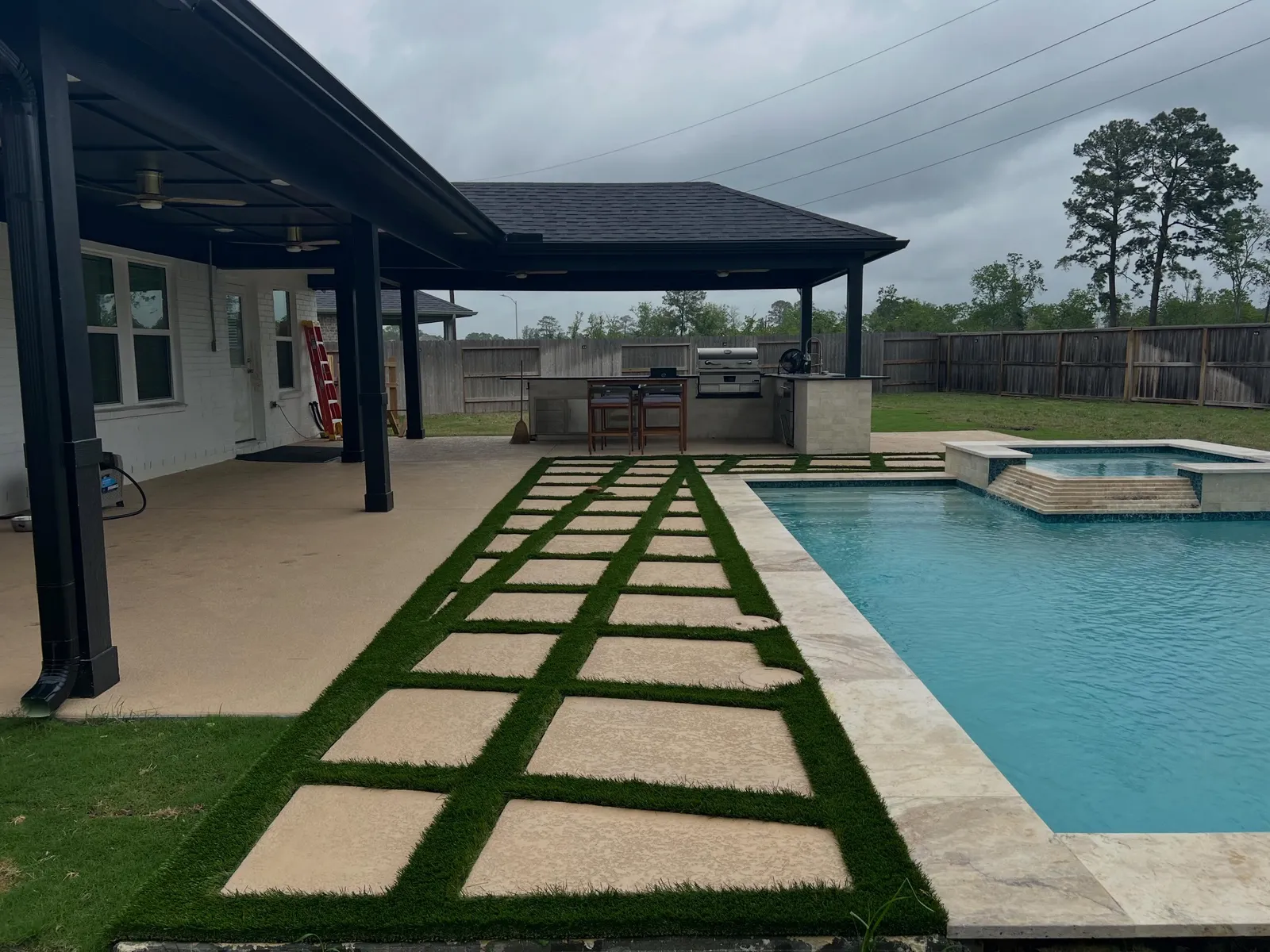 PaversTravertine
Both look great — it comes down to how you weigh a few trade-offs. Stamped concrete is one continuous, seamless surface and usually costs a little less up front, but it can develop hairline cracks over the years and a repair is hard to hide. Pavers cost a bit more, flex slightly with the ground instead of cracking across a slab, and any single unit can be lifted and replaced invisibly. Travertine sits at the premium end and stays coolest underfoot. We're happy to lay samples of each in your yard at the consultation so you can see and feel the difference before you decide. We also build stamped concrete if that's the direction you land on.
Only when the base is done wrong. Shifting and sinking come from a shallow or poorly compacted base, no edge restraint, or water that was never given anywhere to go. We excavate to the right depth, compact a deep road-base in lifts, lock the perimeter with a solid edge restraint, and grade the surface to drain. Done that way, a paver field stays flat and tight for years — and if a spot ever does settle, those pavers can be pulled up, the base topped and re-compacted, and the same stones reset.
It's one of the better choices on both counts, which is why it's so popular around pools. Travertine's naturally porous surface gives it grip when it's wet, and the stone reflects sunlight rather than absorbing it, so it stays much cooler underfoot than concrete or dark pavers in the Texas heat. We use a tumbled or brushed finish for traction and can seal it to fight staining without turning it glossy or slick.
Drainage is designed in from the start, not patched on at the end. We set the finished surface to pitch water away from the house and toward where it should go, and where a yard needs more help we add channel drains, area drains, or a French drain tied into the plan. On patios and pool decks the goal is simple: no standing puddles, and no water running back toward the foundation. We walk the grade with you before we build so you know exactly where the water will move.
Usually, yes. We can extend an existing slab or patio with pavers, wrap a border around it, or overlay sound concrete with a thin paver or travertine system so the heights match up at the door and along the transition. If the existing surface is cracked, heaving, or draining the wrong way, we'll tell you honestly whether it's worth building on or better to remove — no upselling a teardown you don't need.
Paver patios and walkways typically start from around $18–$28 per square foot installed, and travertine or premium driveways run higher depending on the stone, the base work, and how much drainage or demolition is involved. The honest answer is that price depends on your yard — access, grade, and square footage all move the number. That's why the estimate is free: we measure on site and give you a clear, itemized quote with the base and drainage spelled out, so there are no surprises later.